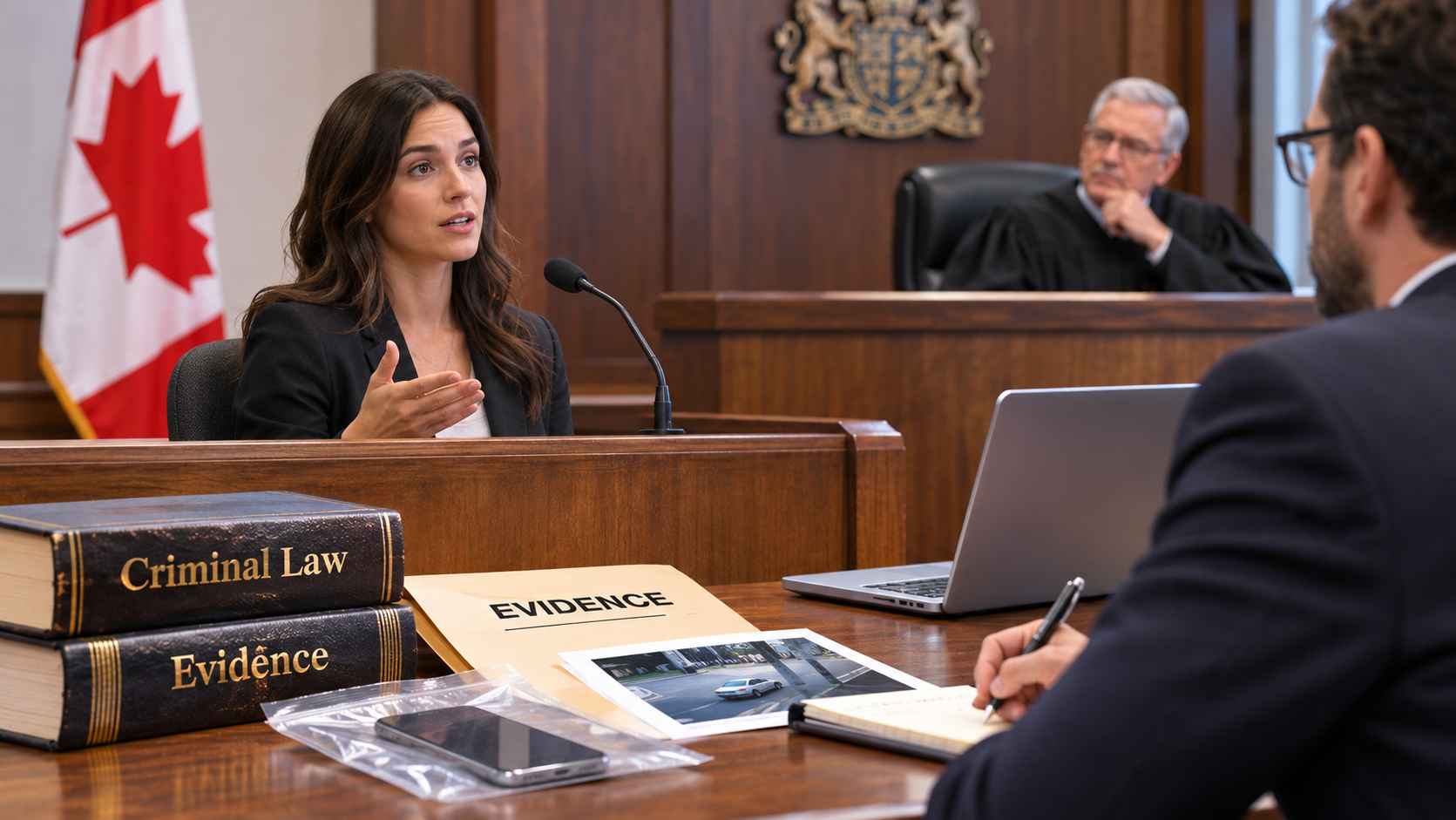
Witnesses play an important role in Canada’s criminal justice system. Whether someone observes an incident, provides information during an investigation, or testifies in court, their account may help investigators and legal professionals understand what happened.
However, witness testimony is not automatically considered accurate simply because someone describes an event with confidence. Human memory, observation, and communication can be influenced by several factors, making careful evaluation essential.
Canadian criminal proceedings are designed to examine evidence fairly while protecting the rights of accused individuals and respecting the experiences of complainants and witnesses. Understanding how witness testimony is assessed helps explain why evidence, context, and established legal procedures are essential to reaching informed decisions.
What Role Do Witnesses Play in Criminal Investigations?
A witness is generally someone who can provide information relevant to an investigation or legal proceeding.
Witnesses may have directly observed an alleged incident, heard conversations, noticed unusual circumstances, or possess information that helps establish a sequence of events.
During an investigation, police may interview witnesses to gather details about what they remember. These accounts can help investigators identify additional evidence, clarify circumstances, or determine whether further investigation is necessary.
However, a witness statement does not automatically establish that a criminal offence occurred.
Criminal defence professionals, including Stephen Jack Criminal Lawyer, work within the Canadian legal system to examine allegations and assess evidence relevant to criminal proceedings.
Witness information must be considered alongside other available evidence and the legal standards governing criminal cases.
Understanding Eyewitness and Expert Evidence
Not all witnesses contribute the same type of information to criminal proceedings.
Eyewitnesses provide accounts of events they personally observed. Their testimony may involve identifying people, describing actions, or explaining what occurred at a particular location.
For example, an eyewitness may describe a confrontation they observed or explain the sequence of events surrounding an alleged incident.
Expert witnesses, by contrast, provide specialized knowledge that may help courts understand technical or scientific issues.
Depending on the case, expert evidence may involve forensic analysis, medical findings, digital records, or other subjects requiring specialized expertise.
Expert witnesses must generally meet legal requirements before offering opinion evidence, including demonstrating appropriate qualifications and providing relevant, reliable assistance to the court.
Both eyewitness and expert evidence can be valuable. However, neither type should be accepted without considering its reliability, limitations, and relevance.
Why Human Memory and Observation Can Be Imperfect
Human memory is not a perfect recording of past events.
People may remember important details accurately while overlooking or misinterpreting others.
Factors such as lighting, distance, stress, distractions, and the duration of an event can affect what someone observes.
Memory may also change over time. Individuals sometimes forget details or become uncertain about the order in which events occurred.
These limitations do not necessarily mean a witness is dishonest.
A person may genuinely believe their account is accurate while unintentionally making mistakes.
This distinction matters because courts must consider both the honesty of a witness and the accuracy of the information provided.
Recognizing the limitations of memory allows testimony to be examined carefully without automatically dismissing or accepting a witness’s account.
How Witness Statements Are Examined
Witness statements may be collected during police investigations and later reviewed as part of criminal proceedings.
Investigators may record interviews, prepare written notes, or obtain formal statements describing what witnesses remember.
As a case progresses, these records may become part of the disclosure provided to the accused, subject to applicable legal rules.
Defence counsel may review statements to identify relevant details, clarify timelines, and compare accounts with other available information.
Where a witness later testifies in court, differences between earlier statements and courtroom testimony may become relevant.
However, not every difference is significant.
A minor variation in wording may have little effect on the overall evidence, while a substantial inconsistency concerning an important event may require closer examination.
Courts consider these differences within the broader circumstances rather than applying automatic conclusions.
Why Consistency and Context Matter
Consistency can be important when evaluating witness testimony, but it is not the only measure of reliability.
A witness may provide a generally consistent account while being mistaken about a particular detail.
Similarly, small inconsistencies do not necessarily undermine an otherwise reliable account.
Context helps explain why differences may arise.
For example, individuals observing the same incident from different locations may notice different details.
One witness may focus on a person’s actions, while another remembers surrounding conversations or environmental conditions.
Courts may consider whether differences relate to central facts or less important details.
They may also examine how witness accounts compare with independent evidence.
The objective is not to require every witness to remember events identically, but to assess whether the available information reliably establishes disputed facts.
The Role of Cross-Examination in Criminal Trials
Cross-examination is an important part of the Canadian criminal trial process.
After a witness gives evidence during examination by one party, the opposing party generally has an opportunity to question that witness.
Cross-examination allows relevant aspects of testimony to be examined more closely.
Questions may address observations, memory, previous statements, inconsistencies, or the circumstances surrounding an alleged event.
The process can also help clarify information that was incomplete or unclear during earlier testimony.
However, cross-examination is subject to legal rules and judicial oversight.
Its purpose is not to intimidate witnesses or encourage speculation. Rather, it provides a structured opportunity to test evidence while respecting applicable protections.
Fair questioning helps courts assess the strengths and limitations of testimony before reaching conclusions.
How Physical and Digital Evidence Can Support Testimony
Witness statements are often considered alongside physical and digital evidence.
Physical evidence may include objects, photographs, medical findings, or other materials connected to an investigation.
Digital evidence can include text messages, emails, surveillance footage, electronic records, and information stored on devices.
These materials may help establish timelines, verify particular details, or provide additional context.
For example, surveillance footage may assist in determining when an event occurred, while electronic communications may clarify interactions between individuals.
However, physical and digital evidence also require careful examination.
A recording may show only part of an incident, and an electronic message may be misunderstood without the surrounding conversation.
Evidence can support, challenge, or provide context for witness testimony. Its significance depends on the facts and applicable legal rules.
Why Courts Must Assess Credibility and Reliability
Canadian courts distinguish between witness credibility and the reliability of testimony.
Credibility generally concerns whether a witness is being truthful, while reliability concerns whether the witness’s account is accurate.
A witness can be sincere but mistaken.
Courts may consider observation conditions, memory, consistency, supporting evidence, and other relevant circumstances when evaluating testimony.
The Criminal Code of Canada establishes important aspects of criminal law and procedure, including offences relating to deliberately false testimony under oath.
However, questions about the admissibility and assessment of witness evidence also involve other legislation and established legal principles.
In criminal trials, the prosecution must prove guilt beyond a reasonable doubt.
Careful evaluation of testimony helps ensure that legal decisions are based on reliable evidence rather than assumptions.
The Role of Criminal Defence Lawyers in Reviewing Evidence
Criminal defence lawyers play an important role in examining witness testimony and other evidence presented during criminal proceedings.
Their responsibilities may include reviewing disclosure, identifying relevant inconsistencies, assessing legal issues, and preparing appropriate questions for witnesses.
Legal counsel may also consider whether evidence was collected lawfully and whether particular information is admissible.
Individuals seeking experienced criminal defence representation may benefit from understanding how a lawyer evaluates evidence and explains the procedures involved in criminal cases.
This work does not mean that every witness statement is unreliable or that every allegation can be successfully challenged.
Rather, legal representation helps ensure that evidence receives appropriate examination and that accused individuals can participate meaningfully in the legal process.
Conclusion: Why Careful Evidence Assessment Matters
Witnesses provide valuable information that can help Canadian courts understand the circumstances surrounding criminal allegations.
However, testimony must be evaluated with attention to memory, observation, credibility, reliability, and context.
Cross-examination, supporting evidence, and established legal procedures help ensure that witness accounts are examined fairly.
Ultimately, Canada’s criminal justice system depends on careful consideration of all relevant, admissible evidence rather than assumptions about what occurred.
Respecting this process supports fair treatment for accused individuals, complainants, and witnesses while strengthening public confidence in the administration of justice.